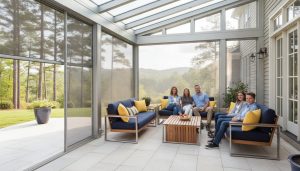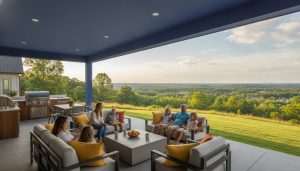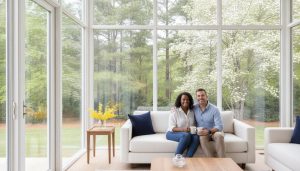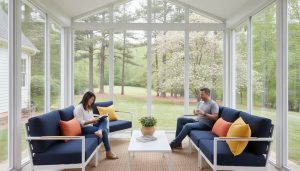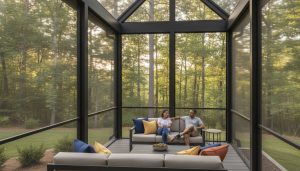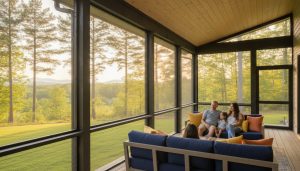

Imagine walking onto your deck on a crisp April morning, only to find every chair and table buried under a thick, gritty layer of neon-yellow pine pollen. By noon, the North Georgia humidity has settled in, bringing a swarm of mosquitoes that makes your outdoor space feel more like a swamp than a sanctuary. If you’ve lived here for any length of time, you know that finding the best sunroom for georgia climate isn’t just a luxury. It is a necessity for anyone who actually wants to enjoy their backyard without a constant battle against the elements.
We understand the frustration of having a beautiful home but feeling trapped inside because the weather won’t cooperate. This comparison guide will help you navigate the latest 2026 building codes and design trends to find a solution that works for your specific lifestyle. You’ll discover how the right choice can transform your home into a year-round retreat that stands up to mountain winters and sweltering summers alike. We will walk through the benefits of traditional screened porches and high-tech LifeRooms, ensuring you have the information needed for a stress-free upgrade that adds lasting value to your property.
Key Takeaways
- Understand how North Georgia’s humidity and the notorious “Yellow Season” pollen influence which enclosure styles will truly thrive on your property.
- Discover why the best sunroom for georgia climate often involves a hybrid design that balances refreshing airflow with a tight seal against seasonal allergens.
- Explore the unique advantages of LifeRoom technology and flex-vinyl windows for managing intense UV heat and fluctuating temperatures.
- Compare the return on investment and year-round usability of traditional screened porches versus fully conditioned four-season sunroom additions.
- Use our 5-question decision checklist to identify the ideal outdoor living space for your home’s layout and your family’s specific needs.
Understanding the North Georgia Climate Challenge
Living in Gainesville or Cumming offers stunning views of the foothills, but our local weather can be a fickle partner for homeowners. While many people start with a traditional wooden deck, they quickly find that it sits empty for most of the year. Between the blistering July sun and the surprise frosts of the mountain air, an open-air platform often fails to provide the year-round value you deserve. To find the best sunroom for georgia climate, you have to look beyond basic aesthetics and consider the raw environmental forces at play in our specific corner of the state.
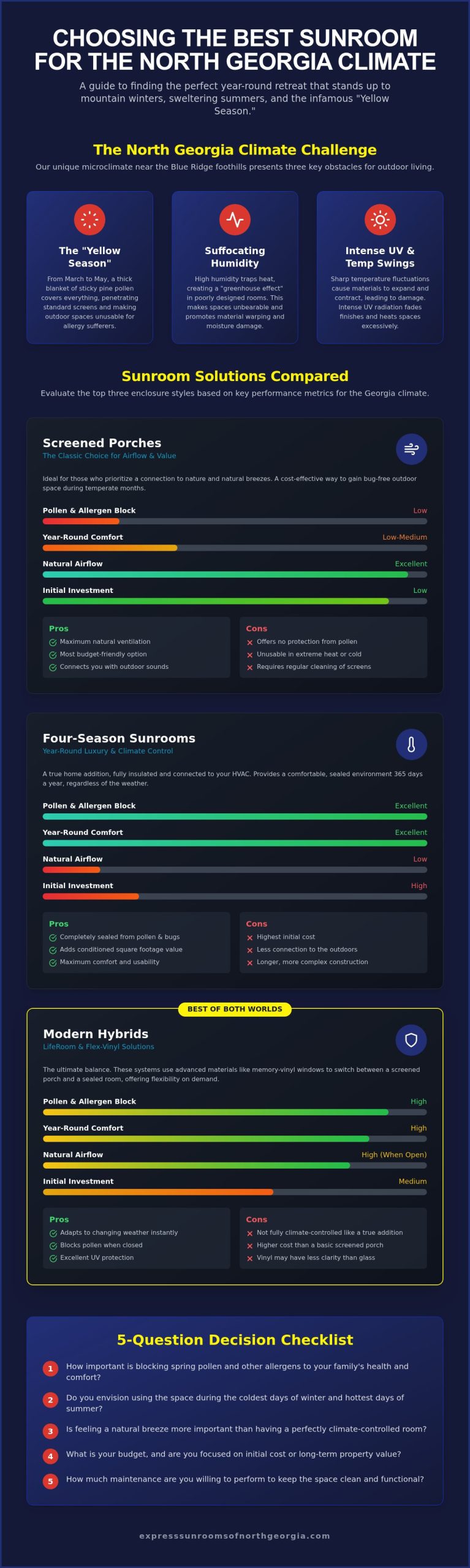
We face a unique trio of challenges: suffocating humidity, intense UV radiation, and the infamous “Yellow Season.” Because we are situated near the Blue Ridge foothills and Lake Lanier, our local microclimate experiences sharper temperature swings than the urban heat island of Atlanta. These fluctuations cause standard building materials to expand and contract rapidly. This movement leads to warped wood, peeling paint, and faded finishes if the right products aren’t selected from the start. When you are researching What is a Sunroom?, it’s vital to recognize that a design working in the Midwest will likely fail under the heavy atmospheric pressure of a Georgia summer.
The “Yellow Season”: Combatting Georgia Pollen
From late March through May, North Georgia is blanketed in a fine, sticky pine pollen that penetrates every corner of a standard porch. Standard insect screens are designed to keep out large pests, not microscopic allergens. A truly pollen-proof enclosure requires a sealed environment or specialized flex-vinyl systems. This allows you to enjoy the spring bloom without the relentless sneezing or the need to pressure wash your outdoor furniture every single weekend. Investing in a sealed space ensures your sanctuary stays clean during the peak of the pollination cycle.
Humidity and Thermal Comfort
Humidity doesn’t just make you sweat; it changes how your body perceives heat. In a poorly designed glass room, a “greenhouse effect” can trap moisture and thermal energy, making the space unbearable by noon. The best sunroom for georgia climate utilizes high-performance glass and strategic ventilation. This design allows you to harness cooling mountain breezes while blocking the stagnant, heavy air that defines our summers. By choosing materials that reflect UV rays rather than absorbing them, your new addition remains a comfortable retreat rather than a heat trap. We focus on creating spaces where the transition from your air-conditioned living room to your sunroom is seamless and refreshing. Understanding the principles behind an energy efficient sunroom in Georgia is essential to ensuring your new space stays comfortable without driving up your utility bills.
Screened Porches: The Classic Choice for Airflow and Value
For many homeowners in North Georgia, the dream of outdoor living is less about a sealed glass box and more about feeling the breeze without the sting of a mosquito. A custom screened porch offers that immediate connection to nature. It provides a shaded sanctuary where you can listen to the cicadas on a July evening without needing a bottle of bug spray. While it might not offer the climate control of a full addition, it remains a top contender when considering the best sunroom for georgia climate for those who prioritize ventilation and cost-effectiveness.
Building a screened porch is often the most budget-friendly way to significantly expand your usable square footage. In Gainesville, where many properties back up to wooded lots or Lake Lanier, a porch allows for a seamless transition between your kitchen and the great outdoors. It is the ideal choice if you primarily use your outdoor space during the temperate months of early summer and autumn. We often suggest upgrading from standard fiberglass mesh to high-durability polyester or pet-resistant screens. These materials withstand the claws of family pets and the occasional stray branch during a summer thunderstorm, ensuring your investment remains intact for years.
Pros and Cons of the Screened Approach
Natural cooling is the primary draw here. The open mesh allows air to circulate freely, which is essential when the humidity peaks. However, the trade-off is that you are still exposed to the temperature extremes of winter and the heavy pollen of spring. To keep your porch looking pristine, you’ll need to commit to a few routine maintenance tasks:
- Gently vacuuming screens to remove dust and spider webs.
- Wiping down the frames with a mild detergent twice a year.
- Inspecting the mesh for small tears that could let in gnats or “no-see-ums.”
Design Ideas for North Georgia Backyards
To truly master the Georgia heat, we recommend integrating oversized ceiling fans to keep air moving even on stagnant afternoons. We also focus on architectural harmony. Your new porch shouldn’t look like an afterthought; it should appear as if it was built with the original house. By matching rooflines, shingles, and trim colors, we create a cohesive look that boosts curb appeal. Choosing a design that complements your home is a vital step in creating the best sunroom for georgia climate for your family’s needs. If you are looking for inspiration, you can explore several Screened Porch Design Ideas that work perfectly with local home styles.
If you’re ready to see how a new porch could fit your backyard, we’d love to help you explore our Screen Porches that are built to last.
Four-Season Sunrooms: Year-Round Luxury in Gainesville
While the screened porch is the classic choice for airflow, the four-season room represents a permanent expansion of your home’s footprint. In Gainesville, where winter mornings can drop into the twenties and summer afternoons hit triple digits, a true four-season sunroom represents the gold standard for comfort. To be the best sunroom for georgia climate, the structure must feature thermally broken frames and high-performance glass that acts as a permanent barrier against our intense southern sun. This isn’t just an enclosure; it’s a structural addition designed to meet the rigorous 2026 Georgia building codes for insulation and energy efficiency.
Climate Control and Energy Efficiency
Modern glass technology has evolved to handle the specific challenges of our region. Low-E coatings reflect infrared light, which keeps heat outside during the summer while trapping warmth indoors during the winter. By integrating your home’s existing HVAC system or adding a dedicated mini-split unit, the space remains usable 365 days a year. By investing in high-performance glass, you protect your interior finishes from UV fading while securing a solid return on investment. Sunroom additions in our region typically see an average ROI of 49% according to current market data. To learn how to maximize that investment while keeping cooling costs low, our homeowner’s guide to energy efficient sunrooms in Georgia covers current GEFA rebate programs and the thermal envelope strategies that make the biggest difference.
The Aesthetic Advantage
We don’t just tack on a room; we create a space that feels like a natural extension of your floor plan. From matching your home’s existing siding to installing custom flooring and recessed lighting, the result is a seamless transition from your living room to the outdoors. If you’re ready to see how a permanent addition can change your daily life, look at the projects completed by Express Sunrooms of North Georgia in Gainesville to see recent local work. These rooms provide the real room feel that smaller enclosures can’t match, offering a quiet, climate-controlled place to entertain guests year-round.
The Modern Hybrid: LifeRoom and Flex-Vinyl Solutions
Many homeowners feel torn between the breezy openness of a screened porch and the total climate control of a four-season addition. If you want the flexibility to switch between these two worlds, a hybrid system is often the best sunroom for georgia climate. These modern solutions address our region’s specific pain points, particularly the “Yellow Season” pollen and the oppressive July heat, by utilizing technology that adapts to the hour. Instead of being locked into one configuration, you can enjoy a space that breathes when it’s beautiful and seals tight when the elements turn harsh.
The LifeRoom represents the pinnacle of this adaptable design. It isn’t just a room; it’s an outdoor living experience that uses motorized screens and “Cool Mist” technology to redefine comfort. In the middle of a sweltering North Georgia afternoon, the integrated misting system can drop the perceived temperature by up to 40 degrees. This allows you to stay outside comfortably even when the humidity makes a standard deck feel like an oven. When the pollen begins to fall in March, these systems provide a critical defense that standard screens simply cannot match.
LifeRoom Features for Tech-Savvy Owners
For those living near Lake Lanier or in the rolling hills of Hall County, the LifeRoom offers a level of convenience that fits a modern lifestyle. The “Smooth Glide” motorized system allows you to lower or raise your screens with a remote control, giving you instant protection from sudden summer rain or a swarm of evening gnats. Integrated LED lighting ensures the space is just as functional at midnight as it is at noon. It’s a sophisticated solution for homeowners who want a high-tech sanctuary that handles the heavy lifting of climate management automatically.
Flex-Vinyl Windows: The Three-Season Powerhouse
If you prefer a more traditional look with extreme durability, flex-vinyl window systems are a “secret weapon” for our climate. These panels are made from a rugged, transparent vinyl that is virtually indestructible; it can be pushed, leaned on, or struck by a stray golf ball and will snap back to its original shape. This makes them far more resilient than glass in high-traffic areas where kids or pets are playing. These systems are uniquely suited for Georgia because they offer incredible versatility:
- 75% Airflow: The panels slide to the top or bottom, opening three-quarters of the window area to the breeze.
- 100% Pollen Seal: During the peak of spring, you can close the panels completely to create a dust-tight barrier.
- Easy Maintenance: Panels can be removed entirely in minutes if you want a full-screen experience for a special event.
Keeping these windows clear is simple; a quick wipe with a specialized cleaner once or twice a year keeps the vinyl looking as transparent as glass. If you’re intrigued by the idea of a space that transforms with the seasons, we invite you to explore our LifeRooms and hybrid enclosures to find the perfect fit for your backyard.
Decision Guide: Choosing Your Perfect Outdoor Space
Selecting the best sunroom for georgia climate requires a realistic look at how you spend your weekends and what you value most in a home addition. To simplify the process, we recommend a five-question checklist to narrow your focus. Do you envision using the room during a freezing January morning? Is the sight of yellow pine pollen on your upholstery a deal-breaker? Do you prefer the natural sounds of the North Georgia woods over the hum of an air conditioner? Are you looking to maximize your home’s official heated square footage for a future sale? Finally, how much time can you commit to seasonal cleaning? Your answers will immediately point you toward either the breezy freedom of a porch or the sealed sanctuary of a four-season room.
Beyond personal preference, you must consider the structural and legal requirements of building in Gainesville or Hall County. With the 2026 building code updates now in effect, ensuring your new space complies with energy efficiency and safety standards is more critical than ever. A professional builder doesn’t just provide labor; they provide the peace of mind that your investment is legally sound and built to last against the shifting clay and heavy rains of the North Georgia foothills.
Budget vs. Lifestyle: Finding the Sweet Spot
While we have discussed the 49% average ROI for full sunroom additions and the high 70% to 80% return for screened porches, your final choice should balance initial investment with long-term daily utility. A screened porch is the most accessible way to start enjoying the outdoors, but if you find yourself retreating inside the moment the humidity rises or the pollen falls, the extra cost of a hybrid or four-season room pays for itself in usable hours. For a deeper look at how these options fit your financial goals, you can review our guide on Sunroom Cost Georgia. The most valuable room is the one that never sits empty because of the weather.
The Express Sunrooms of North Georgia Advantage
Our role as your trusted local expert goes beyond construction; we are meticulous project managers who handle the logistical headaches so you don’t have to. We understand the specific environmental factors in Gainesville and the permitting nuances that affect your home’s structural integrity. Through our “No-Hassle” process, we manage everything from the initial design and local permitting to the final debris removal and walkthrough. This professional oversight ensures your project is completed on time and exactly as envisioned. If you are ready to stop dreaming and start building, Schedule your free design consultation today! and let us guide you toward the perfect outdoor upgrade for your home.
Transform Your Backyard Into a Year-Round Sanctuary
Your backyard has the potential to be more than just a view you admire from behind a window. Whether you choose the airy ventilation of a custom porch or the climate-controlled luxury of a four-season addition, the goal is to reclaim your outdoor space from the intense heat and gritty pollen. Finding the best sunroom for georgia climate means selecting a design that balances your lifestyle needs with the durability required for our unique North Georgia foothills.
As a trusted Gainesville local builder, we take pride in handling the heavy lifting for you. From energy-efficient custom designs to end-to-end professional project management, we ensure your installation is as stress-free as the afternoons you’ll spend in your new room. You don’t have to navigate building codes or permitting alone. We’re here to guide you through every stage of the process.
Ready to take the first step toward your home’s transformation? Get a Free Estimate for Your North Georgia Sunroom today. We look forward to helping you create a space where your family can relax together for years to come.
Frequently Asked Questions
Which is better for Georgia pollen: a sunroom or a screened porch?
A sunroom is significantly better than a screened porch for managing Georgia pollen. Standard screens are designed to block insects, but they allow fine pine pollen to drift through the mesh and coat your furniture. A sealed sunroom or a hybrid enclosure with vinyl panels creates a physical barrier that keeps your sanctuary clean during the peak “Yellow Season” from March to May. It’s the only way to guarantee a dust-free experience.
Do sunrooms add significant value to North Georgia homes?
Yes, sunrooms add measurable value, especially true four-season additions that count as conditioned square footage. While a screened porch has a high ROI, often 70% to 80% in the Atlanta and Gainesville markets, a sunroom enhances the total heated and cooled area of the home. This makes it the best sunroom for georgia climate for homeowners looking to maximize long-term equity and appraisal value.
Can I convert my existing screened porch into a four-season sunroom?
You can often convert an existing screened porch into a sunroom, provided the foundation and framing meet current safety standards. We evaluate the current structure to ensure it can support the weight of glass or vinyl panels and meet 2026 energy codes. This porch conversion is a popular way to upgrade usability without the cost of a full new build. It’s a great way to turn a seasonal space into a year-round retreat.
How much does a typical sunroom installation cost in Gainesville?
Sunroom costs in Gainesville depend on the size, materials, and whether you choose a three-season or four-season design. While industry averages for Georgia can range from $22,000 to over $75,000, your specific investment will depend on features like HVAC integration and glass quality. We recommend a professional consultation to get an accurate estimate tailored to your home’s architecture and your specific lifestyle goals.
Do I need a permit to build a sunroom in North Georgia?
Yes, most sunroom and porch projects in Hall, Forsyth, and surrounding counties require a building permit. Local codes, including the updated 2026 Georgia amendments, dictate safety and energy standards that must be followed. We handle the entire permitting process for our clients to ensure everything is legal and up to code. This saves you the headache of dealing with local government offices and ensures your home’s structural integrity.
How do LifeRooms handle the intense Georgia summer heat?
LifeRooms handle the intense Georgia summer heat by using motorized screens and “Cool Mist” technology. This misting system can lower the perceived temperature by up to 40 degrees, making the space comfortable even on humid July afternoons. The screens also block a significant portion of UV rays, preventing the “greenhouse effect” often found in traditional glass rooms. It’s a high-tech solution for lakefront properties near Lake Lanier.
What is the difference between a three-season and a four-season sunroom?
The primary difference between a three-season and four-season sunroom is the level of insulation and climate control. If you want the best sunroom for georgia climate that works in January, a four-season room is the right choice. It uses thermally broken frames and high-performance glass to stay comfortable all 365 days of the year. A three-season room is an excellent choice for three parts of the year but lacks the thermal barriers needed for winter.
How long does the sunroom installation process usually take?
Most sunroom installations take between two to six weeks once the actual construction phase begins. The total timeline from design to completion is longer because it must include the time required for site preparation, permitting, and final inspections. We provide a detailed project schedule before we break ground so you know exactly what to expect. This ensures you’re never left wondering about the status of your new outdoor living space.